
Iron – sources, daily requirements and importance
What is iron?
Iron is an essential mineral necessary for human health and plays a key role in growth, development and the overall functioning of the body. One of its primary roles is to help produce haemoglobin, the protein in red blood cells (erythrocytes) that carries oxygen throughout the body.
Iron is found in food in two forms:
- haem iron – found in foods of animal origin; iron in this form is easily absorbed;
- non-haem iron – found in foods of plant origin; it has lower bioavailability than haem iron.
Iron from food is absorbed in the small intestine, on average about 10–20% of the amount taken in. Factors such as vitamin C can improve iron absorption, while substances such as phytates, found in whole grains, tannins from coffee and tea, and calcium from dairy products can inhibit it.
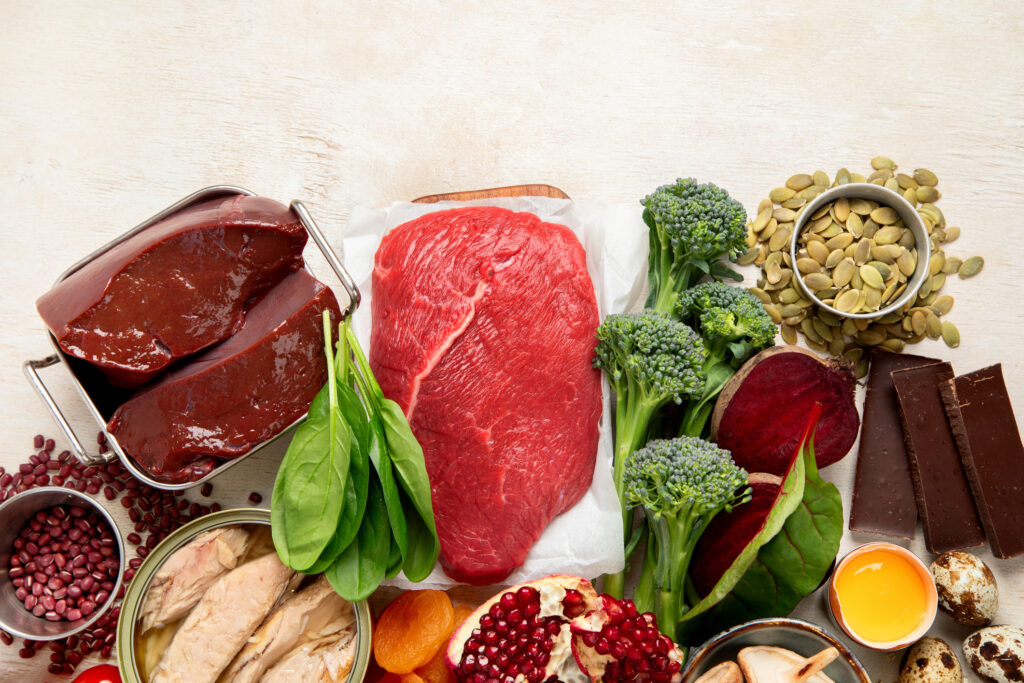
Iron-rich food sources
To meet the body's daily iron needs, it is important to eat a varied diet. When intake from food is insufficient, supplements containing iron can be considered.
Iron sources of animal origin:
- red meat (beef, lamb)
- liver
- seafood (shellfish, oysters)
- poultry (chicken, turkey).
Plant sources of iron:
- pulses (beans, lentils, chickpeas)
- dark leafy greens (spinach, kale)
- seeds and nuts (pumpkin seeds, cashews, almonds)
- iron-fortified cereals
- dark chocolate (at least 45% cocoa).
Daily iron requirements
Iron requirements vary depending on age, sex and specific physiological states, such as pregnancy. Women generally have higher requirements, especially during menstruation and pregnancy.
| Males | Females | |
|---|---|---|
| 4–8 years | 10 mg | 10 mg |
| 9–13 years | 8 mg | 8 mg |
| 14–18 years | 11 mg | 15 mg |
| 19–50 years | 8 mg | 18 mg (27 mg during pregnancy) |
| Over 51 years | 8 mg | 8 mg |
Distribution of iron in the human body
After absorption, iron travels through the bloodstream bound to transferrin, a protein that ensures its delivery to the various tissues.
The body of a healthy adult contains approximately 3–4 grams of iron, distributed as follows:
- haemoglobin (~70%) – used primarily in red blood cells to transport oxygen;
- myoglobin (~10%) – stores oxygen in muscle tissue;
- iron stores (15–30%) – in the liver, spleen and bone marrow, as ferritin and haemosiderin;
- functional iron (1–2%) – built into enzymes important for metabolic processes;
- serum iron (0.1%) – circulates in the blood bound to transferrin.
Iron levels are regulated at the site of absorption. The protein hepcidin controls the absorption of iron and its release from the stores, maintaining a balance to prevent deficiency or overload.
The role of iron in the body
- Oxygen transport – as an essential component of haemoglobin, iron helps carry oxygen from the lungs to the tissues and return carbon dioxide to the lungs.
- Muscle function – iron is also a key element of myoglobin, which stores and releases oxygen during muscle activity.
- Activity of metabolic enzymes – iron is part of the enzymes involved in energy metabolism.
- Immune defence – it plays a role in the proper functioning of white blood cells, which are necessary for fighting infections.
- DNA synthesis – iron is necessary for the function of the enzymes involved in copying genetic material.
- Cognitive development – adequate iron levels are critical for brain function, especially in children.
Important tests for assessing iron status
To assess the level of iron in the body, several blood tests are usually done:
- serum iron – measures the circulating iron bound to transferrin;
- serum transferrin – the protein that transports iron through the bloodstream;
- total iron-binding capacity (TIBC) – indicates the maximum amount of iron that transferrin can bind;
- transferrin saturation – the percentage of binding sites on transferrin occupied by iron (usually 20–45%);
- serum ferritin – shows how large the body's iron stores are;
- red blood cell indices in the full blood count – useful for diagnosing iron deficiency anaemia.
Iron
TIBC - total iron-binding capacity
UIBC - unsaturated iron-binding capacity
Ferritin
Transferrin
Transferrin saturation
Full blood count - 5-part differential
Iron deficiency and overload
- Iron deficiency – common in women of reproductive age, young children and people on restrictive diets, and leads to iron deficiency anaemia.
- Iron overload (haemosiderosis) – iron can accumulate in organs and potentially cause damage to the liver, heart and pancreas.
Keep an eye on your iron levels
Iron is essential for various bodily functions, from oxygen transport to metabolic support. Maintaining a balanced, iron-rich diet, regularly monitoring iron levels and consulting healthcare professionals when symptoms of deficiency or overload appear are key to overall health.
