
Anti-Müllerian hormone (AMH): a marker of ovarian reserve and fertility
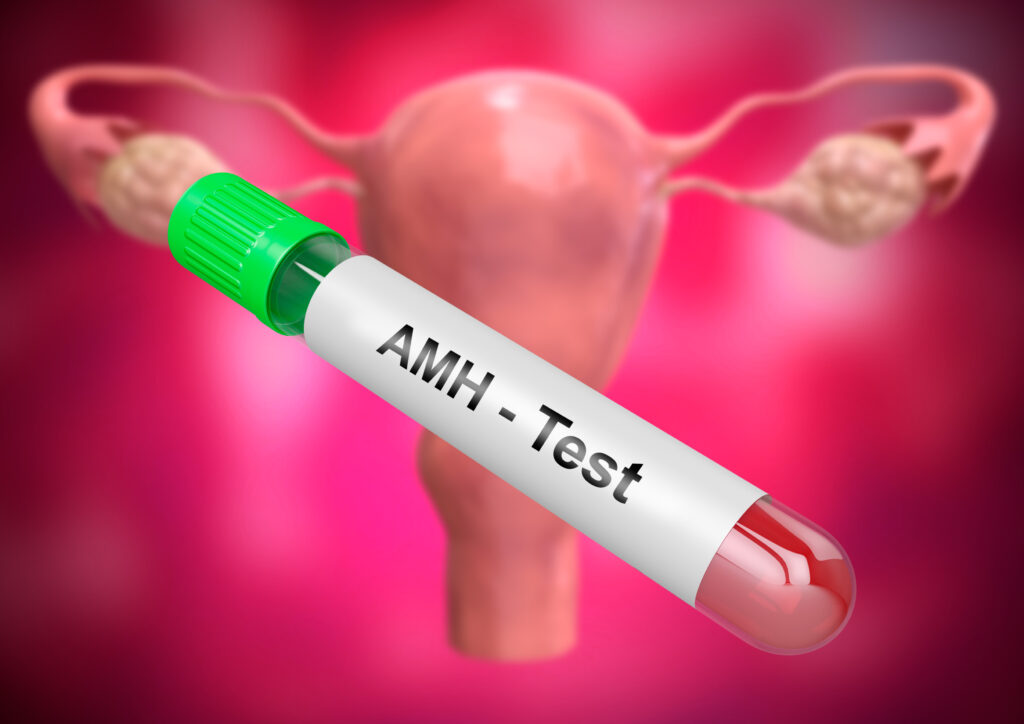
Anti-Müllerian hormone (AMH) is an essential biomarker in women’s reproductive health, offering an insight into ovarian reserve, i.e. the number of eggs remaining. Produced by the granulosa cells inside the ovarian follicles, AMH plays a key role in assessing fertility potential and is used in reproductive medicine.
The function of AMH in the female body
During fetal development, AMH plays a key role in male embryos by preventing female reproductive structures from forming. In women, it is secreted by small developing follicles in the ovaries and helps to regulate follicle development.
One of the unique advantages of AMH is that it stays stable throughout the menstrual cycle, which makes it a reliable indicator of ovarian reserve at any time. This makes AMH testing very valuable for women who are considering fertility treatment or planning future pregnancies.
AMH testing: procedure and purpose
AMH levels are measured with a simple blood test. The results help to assess ovarian reserve and can help to estimate how close the menopause may be.
Typical AMH levels by age:
- 20–30 years: 1.5–4.0 ng/mL
- 30–40 years: 1.0–3.5 ng/mL
- 40–50 years: 0.5–2.5 ng/mL
Interpreting AMH levels
- Low AMH (<1.0 ng/mL) – indicates a reduced ovarian reserve, which may affect fertility.
- High AMH (>4.0 ng/mL) – is often associated with polycystic ovary syndrome (PCOS), a condition characterised by too many follicles and a hormonal imbalance.
Although AMH levels give a reliable estimate of the number of eggs, they do not reflect egg quality, which is just as important for fertility.
AMH (anti-Müllerian hormone)
What affects AMH levels?
Several factors can affect AMH levels:
- age – AMH naturally declines over time, reflecting the gradual decrease in the number of ovarian follicles. The most marked decrease occurs after the age of 35, which is associated with reduced fertility;
- body mass index (BMI) – research suggests that a higher BMI may have a negative effect on AMH levels, possibly because of leptin, a hormone secreted by fat cells that can affect ovarian function;
- hormonal contraceptives – long-term use of birth control pills can temporarily lower AMH levels. However, this effect is reversible once contraception is stopped;
- vitamin D levels – some studies suggest that vitamin D plays a role in AMH production, with levels tending to vary with seasonal exposure to sunlight. Vitamin D is thought to support the function of granulosa cells and prevent cell death, which may explain its effect on AMH;
- underlying medical conditions:
- PCOS (polycystic ovary syndrome) – women with PCOS usually have higher AMH levels because of an increased number of ovarian follicles;
- premature ovarian insufficiency (POI) – a condition in which ovarian function declines before the age of 40, often leading to low AMH levels;
- cancer treatment – chemotherapy and radiotherapy can significantly lower AMH levels, indicating a reduced ovarian reserve.
Clinical uses of AMH testing
- Assessing fertility and planning IVF – AMH levels help to predict how a woman will respond to ovarian stimulation in assisted reproduction such as in vitro fertilisation (IVF). Women with higher AMH levels generally produce more eggs during stimulation, while lower AMH levels may indicate a weaker response.
- Diagnosing reproductive disorders – AMH testing is key in diagnosing PCOS, as raised levels indicate an excess of ovarian follicles. It also helps to detect premature ovarian insufficiency (POI), which causes ovarian function to decline at a younger age.
- Preserving fertility before cancer treatment – cancer treatments such as chemotherapy and radiotherapy can significantly damage ovarian function. Measuring AMH before treatment can help in assessing options for preserving fertility, such as egg freezing.
The importance of AMH testing
AMH is a valuable tool in reproductive medicine, offering vital information about ovarian reserve and fertility potential. Whether for family planning, fertility treatment or the diagnosis of reproductive disorders, AMH testing allows women to make informed decisions about their reproductive health.
By monitoring their AMH levels, women can better understand their fertility status and explore options for preserving their reproductive potential.
