
NT-proBNP and heart failure: significance, interpretation and clinical impact
What is heart failure?
Heart failure is a chronic condition in which the heart cannot pump enough blood to meet the body's needs. This leads to symptoms such as difficulty breathing (dyspnoea), swelling of the legs (peripheral oedema) and fatigue. In addition, there may be physical signs such as raised jugular venous pressure and crackles in the lungs. Heart failure can result from structural or functional heart problems, which lead to reduced cardiac output and increased pressure inside the heart, both at rest and during physical activity. Common causes include myocardial dysfunction (both systolic and diastolic), heart valve disease, pericardial abnormalities, endocardial disorders and heart rhythm disorders. Diagnosing heart failure requires identifying the underlying heart problem, often with various imaging tests and biomarker measurements.
NT-proBNP: a key biomarker in heart failure
NT-proBNP (N-terminal pro-B-type natriuretic peptide) is a biomarker that is released into the bloodstream when the heart is under increased pressure or volume overload. This happens when the heart muscle is stretched more than usual.
NT-proBNP comes from the precursor proBNP, which is split into:
- BNP (B-type natriuretic peptide) – the biologically active part, responsible for vasodilation, natriuresis (excretion of sodium) and increased urine production;
- NT-proBNP – an inactive but stable fragment, widely used as a diagnostic marker for heart failure.
BNP and NT-proBNP are released mainly in the ventricles, in response to increased wall tension and fluid overload. The effects of BNP help to reduce the load on the heart by increasing the loss of sodium in the urine, promoting fluid removal and relaxing the blood vessels.
The role of NT-proBNP in managing heart failure
NT-proBNP testing is part of the heart failure treatment process recommended by the European Society of Cardiology (ESC) and the American Heart Association (AHA). This biomarker helps with diagnosis, risk assessment and monitoring the progression of the disease.
Key benefits of NT-proBNP testing:
- early diagnosis – it distinguishes heart failure from other causes of breathlessness, such as lung disease;
- monitoring treatment – a fall in NT-proBNP levels during treatment indicates improved heart performance;
- prognostic value – it helps to identify high-risk patients.
How should NT-proBNP levels be interpreted?
- under 50 years of age – a level above 450 pg/mL points to heart failure;
- between 50 and 75 years – a threshold of approximately 900 pg/mL is indicative;
- over 75 years – values above 1800 pg/mL point to heart failure.
An NT-proBNP level below 300 pg/mL is considered to have a high negative predictive value, which means that heart failure is unlikely. As non-cardiac factors also influence NT-proBNP, the interpretation of the results must take the patient's clinical picture into account.
NT-proBNP
Performing the NT-proBNP test
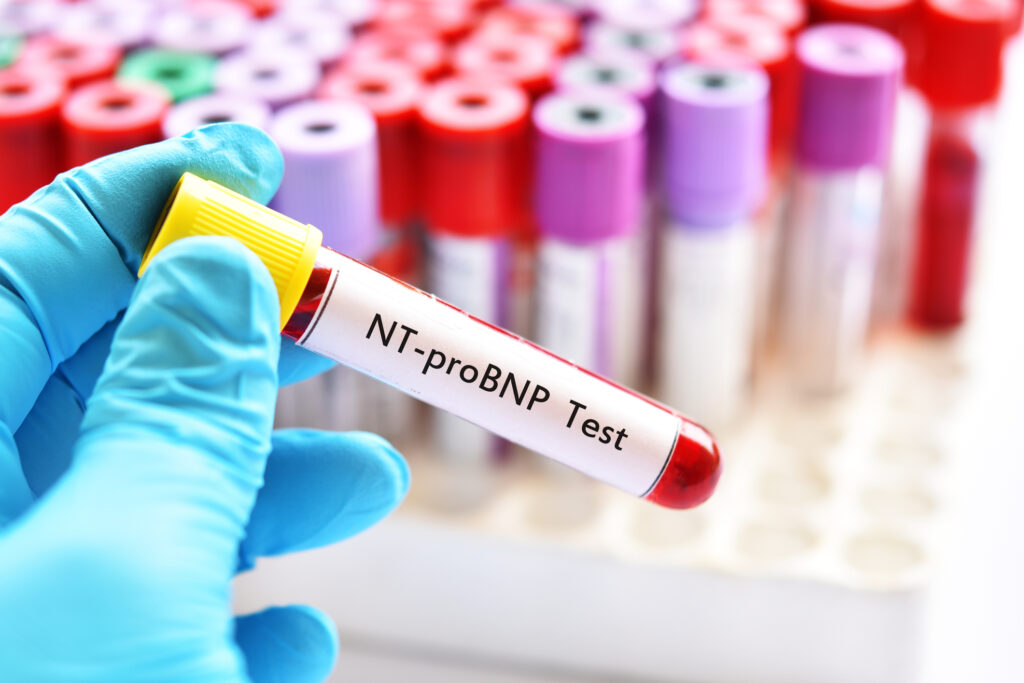
NT-proBNP is measured in a blood sample. The analysis is carried out in the laboratory, and results are usually available within a few hours to a few days, depending on the facility.
Factors that affect NT-proBNP levels
Several factors can affect the NT-proBNP concentration, which can make interpretation more difficult:
- age – levels naturally rise with age;
- sex – women generally have slightly higher NT-proBNP levels than men;
- kidney impairment – reduced kidney function can lead to raised levels, as NT-proBNP is cleared mainly through the kidneys;
- obesity – lower NT-proBNP levels may occur in people with obesity, potentially masking heart failure.
Being aware of these factors is key to an accurate diagnosis and to managing treatment.
Limitations
Although NT-proBNP testing is invaluable for diagnosing heart failure, it is not conclusive on its own. The test should be used together with an ultrasound scan of the heart. In addition, NT-proBNP does not indicate the specific type of heart failure, such as reduced or preserved ejection fraction, which requires further evaluation.
The clinical usefulness of NT-proBNP
In clinical practice, NT-proBNP is particularly useful in emergencies for the rapid assessment of patients with acute shortness of breath. Distinguishing between cardiac and non-cardiac causes can significantly influence immediate treatment decisions.
In the treatment of chronic heart failure, serial NT-proBNP measurements give insight into the progression of the disease and the effectiveness of treatment. A fall in levels usually reflects a positive response to treatment, while persistently high values may indicate poor control or progression of the disease.
NT-proBNP and long-term prognosis
High NT-proBNP levels are associated with poor outcomes, including an increased risk of hospitalisation and death. Monitoring changes over time is useful for assessing the patient's stability and guiding long-term treatment plans.
By assessing NT-proBNP levels regularly, healthcare professionals can make better-informed decisions about adjusting treatment and monitoring strategies, with the ultimate aim of improving quality of life and reducing complications.
Conclusion
NT-proBNP plays a key role in the diagnosis and management of heart failure, offering valuable insight into heart function. However, NT-proBNP results must be interpreted taking into account the patient's age, other conditions (comorbidities) and kidney function. Regular monitoring, combined with clinical evaluation and imaging, improves diagnostic accuracy and helps to optimise patient care.
