
Antibody test for the bacterium Borrelia burgdorferi
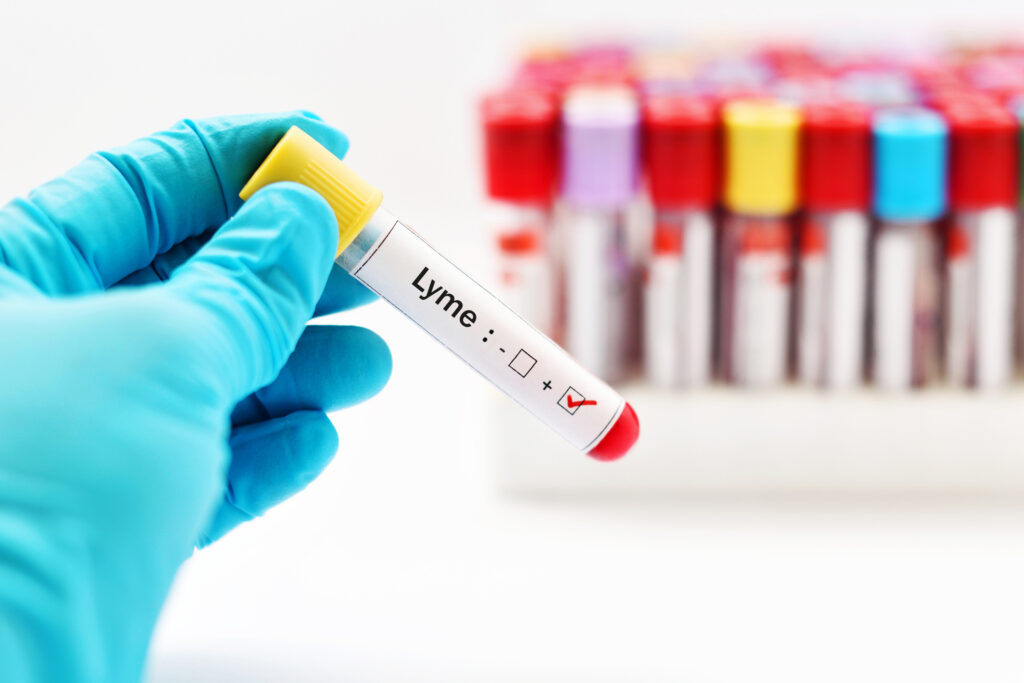
The bacterium Borrelia burgdorferi is the cause of Lyme disease. It is passed to humans through the bite of an infected tick. If left untreated, Lyme disease can cause an infection of the tissues that cover the brain and spinal cord. It can also cause:
- liver and heart problems
- an inability to control the facial muscles (facial paralysis).
Problems can appear months or years later and include constant pain and tiredness, arthritis, and problems with memory and concentration.
The infection is seasonal, occurring from early spring to late autumn, mainly in people who do gardening, spend a lot of time outdoors or walk through bushes or under trees from which ticks fall.
After infection, flu-like symptoms begin:
- headache
- fatigue
- joint and muscle pain
- fever
- swollen lymph glands.
Treatment at this stage is very successful and leaves no lasting effects.
If the disease is not diagnosed and treatment is not started in time, more serious problems develop:
- arthritis
- damage to the peripheral nervous system
- meningitis and encephalitis
- disorders of heart function.
Symptoms of damage to the nervous system can be recognised by:
- a stiff neck
- forgetfulness
- confusion
- fever
- sensitivity to light.
If the disease is still not diagnosed and properly treated at this stage, after several months or years it enters a third stage, with severe neurological symptoms and changes in the joints and skin.
Why do I need this test?
You will need this test if your doctor thinks you have Lyme disease, based on recent travel, time spent outdoors, a physical examination and your symptoms.
After the examination, the next step is serological testing, i.e. the detection of antibodies to the bacterium. For these antibodies to be detectable, a certain amount of time (4–6 weeks) must pass between the tick bite and the test, so that the body can produce enough antibodies for them to be measured.
What do the test results mean?
A negative result means that no antibodies were found. But Lyme disease is difficult to diagnose. This is partly because antibodies may not appear in the blood in the first few weeks after the tick bite. If your results are negative soon after you were infected, the result could be a false negative. In that case, the test is repeated.
A positive result means that antibodies to Borrelia were found and that you may have had, or may have, Lyme disease. False positive results sometimes occur. This means that the test may say you have an infection when you do not. If the antibody tests are positive, your doctor will advise an additional test, a Western blot for IgG and IgM, to confirm the serological tests.
How is this test done?
The test is done on a blood sample. No special preparation is needed.
What could affect the test results?
If you are tested too soon after being infected, you may get a false negative result.
If you have been treated with antibiotics, this can also affect the results.
